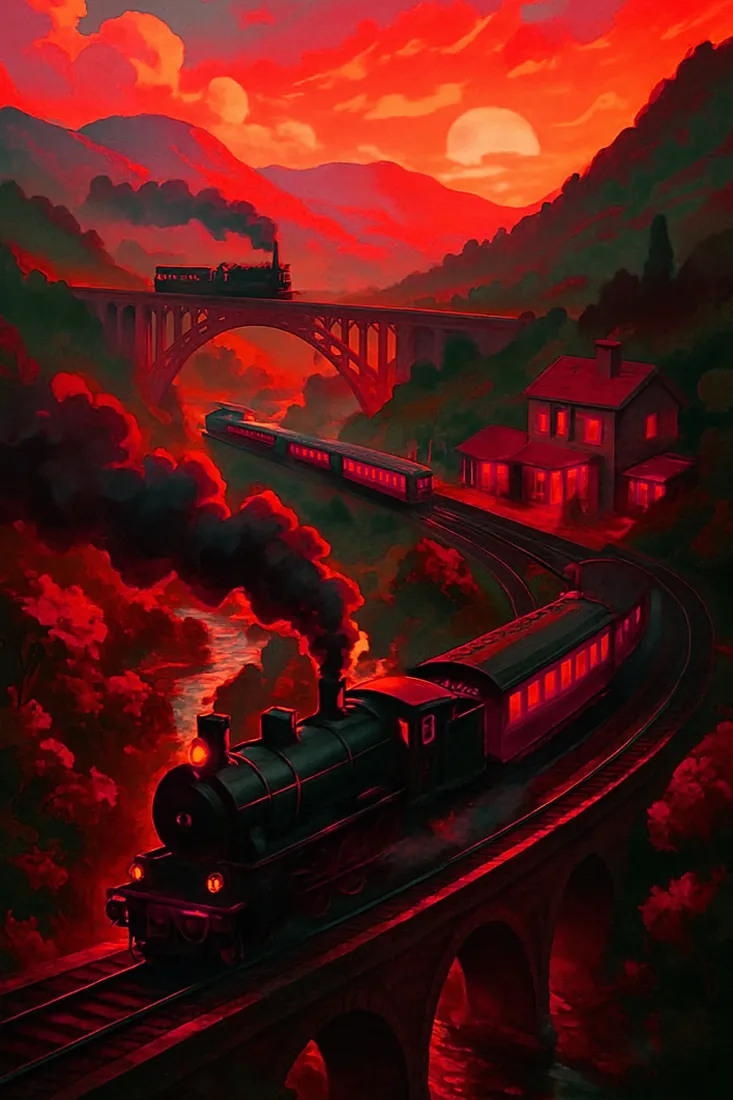
Rail Nation, published by Travian Games, hands you a modest railway company on a fictional map and a simple instruction: deliver what the cities and industries want. Coal to the factory, goods to the town, passengers wherever they wish to go. Each delivery earns money and prestige, and each city that receives what it needs grows a little bigger. At first it feels like a tidy solo train set with a pleasant map.
Then you notice the other companies. They run trains past your stations, they target the same profitable industries, and they belong to associations with names and plans. Within a week the game has stopped being a train set and become something closer to a long negotiation, conducted in timetables. That shift is why Copperbeechplay puts it at the top of the shelf: few browser tycoons make other players matter this much.
Six eras that keep rewriting your network
A round of Rail Nation moves through six eras of railway history, and the official site counts more than 170 authentic trains across them. Each new era brings locomotives that make your first purchases look wheezy, and with them a reason to re-plan. A route that made sense for a slow early engine may be wasted on something faster, while a long haul that was hopeless at the start suddenly becomes the jewel of your network.
That rhythm is the best thing about the game. You never quite settle, because the ground shifts every era, and the decisions about when to upgrade, what to retire and which industries to chase stay interesting for weeks. It also means a late joiner is not doomed. A thoughtful player arriving mid-round can still pick up good routes, because the map keeps reorganising itself around the new trains.
Associations, cities and the race for prestige
Prestige is the scoreboard. You earn it from deliveries, competitions and contributions, and it decides both your personal ranking and the standing of your association. Associations pool effort behind a city, coordinate who hauls what, and invest together in shared headquarters. A good one is a joy, full of people posting supply lists and nudging each other towards the goods a city is short of.
The cities themselves only grow when they are supplied with the goods and passengers they demand, so the whole server becomes a slow argument about which towns deserve attention. Joining an active association early is the single most useful thing a newcomer can do. Playing alone is possible, but you will feel the absence of a team the first time a city you supplied for days is overtaken by a better-organised rival.
Live prices, scenarios and the shape of a round
Rail Nation calculates routes and goods prices in real time, and you feel it. Pile every train onto one lucrative delivery and the reward softens as competitors do the same. The better players watch demand, spread their fleet and keep a few trains free to jump on a sudden shortage. It is not a deep economic model in the Virtonomics sense, but it is responsive enough that lazy routing is punished.
Beyond the classic fictional map there are other scenarios, including an American Dream setting that splits the USA into an East versus West contest and Steam Over Europe, which adds shipping. Event servers appear from time to time with rule changes. If the classic round ever feels familiar, these give experienced players a reason to try fresh tactics without starting a different game altogether.
What the free player experiences
You can play a complete round without spending money, and we did. The premium currency smooths things along, chiefly through speed and convenience, and you will see paying players move a little quicker. What it does not do, in our experience, is replace the planning, timing and teamwork that decide where you finish. A disciplined free player in a strong association outperformed plenty of spenders on our server.
The bigger cost is attention. Trains need sending, and an idle fleet earns nothing, so Rail Nation suits people who can glance at it several times a day. If you can only manage one visit, you will slip down the rankings. That is the trade-off for a game that feels this alive, and it is worth knowing before you commit to a round lasting several weeks.
Rail Nation: opening the books
- Finish the tutorial properly; it explains stations, routes and deliveries more clearly than any forum thread will.
- Connect your station to a couple of nearby industries first, then to the closest city, before reaching further out.
- Apply to an active association with a clear plan and a noticeboard that people actually update.
- Keep every train working; check in morning and evening so nothing sits idle overnight.
- Save some money ahead of the second era so you can buy new engines the moment they unlock.
What we love
- Six eras keep the network changing and the planning fresh for weeks.
- Associations turn a train game into genuine teamwork with shared goals.
- Real-time prices punish lazy routing and reward players who read demand.
- Alternative scenarios give veterans a reason to come back.
What grates
- Needs several check-ins a day to keep the fleet earning properly.
- The economy is lighter than the dedicated business simulators on our shelf.
- A quiet or disorganised association makes the middle of a round feel slow.
The investor Rail Nation rewards
Rail Nation is for the player who wants a tycoon with company. If the idea of planning deliveries with a dozen teammates and watching a city you championed climb the table sounds exciting, this is the one. It suits regular short check-ins, and it is happiest on a desktop with a phone as backup.
The bottom line on Rail Nation
Rail Nation is not the deepest economy on Copperbeechplay, but it is the best-rounded tycoon. The six-era structure keeps the network changing, the live pricing rewards attention, and associations give every delivery a purpose beyond your own bank balance. Free players are treated fairly enough that skill and teamwork still decide most outcomes. Join a lively association early and it will hold you for an entire round.